
ATiO Award Winner 2025: Peptilogics – Redefining the Treatment of Medical Device-Related Infections
From ATiO Pitch Winner to Pivotal Clinical Trial — How a Pittsburgh Biotech Is Developing the First Targeted Treatment for Biofilm
Last year, Peptilogics took the stage at the ATiO Alliance annual meeting and earned the top spot in our pitch competition. Their presentation offered a compelling blend of cutting-edge computational biology and a deep, rigorous understanding of an enormous unmet clinical need. Today, that vision is becoming a reality. With their lead candidate now enrolling patients in a pivotal Phase 2/3 registration trial, Peptilogics is advancing toward a critical proof point for its approach. Here is a closer look at the company’s background, platform, product, and the clinical impact it is pursuing.

Nicholas Pachuda, COO of Peptilogics, receiving the ATiO Best Emerging Company Award at the ATiO Conference 2025.
Background and History: Engineering a New Modality
Peptilogics was founded in 2013 in Pittsburgh with a thesis that was simultaneously simple and ambitious: peptide therapeutics are a vastly under-tapped modality whose full potential can be unlocked with modern computation and rigorous engineering. Peptides, which are short chains of amino acids that sit between traditional small-molecule drugs and large biologics like antibodies, offer a unique middle ground, combining the tunability and tissue diffusion of small molecules with the potency and specificity of biologics.
The company’s first focus was developing its lead asset, PLG0206. In parallel, Peptilogics built an AI platform to scale peptide discovery more broadly, marrying peptide biology with artificial intelligence and high-performance computing. Rather than relying on traditional trial-and-error drug discovery, this engine works backward from a desired set of drug properties — potency, stability, selectivity, manufacturability — to generate novel, clinically viable molecules purpose-built for specific biological environments. This is not drug screening; it is drug engineering.
That platform has matured steadily over more than a decade. Peptilogics has raised approximately $155 million in equity and non-dilutive grant funding to fuel its pipeline. Following positive patient data in 2023, the company closed an oversubscribed $78 million Series B2 financing round in October 2025. In February 2026, the first patient was enrolled in the pivotal Phase 2/3 RETAIN study.
The company’s identity has sharpened with every milestone. Peptilogics is no longer a peptide discovery engine. It is a surgical therapeutics company dedicated to locally delivered, intra-operative medicines designed to cure and prevent device-related infections wherever a medical device is implanted in the human body.
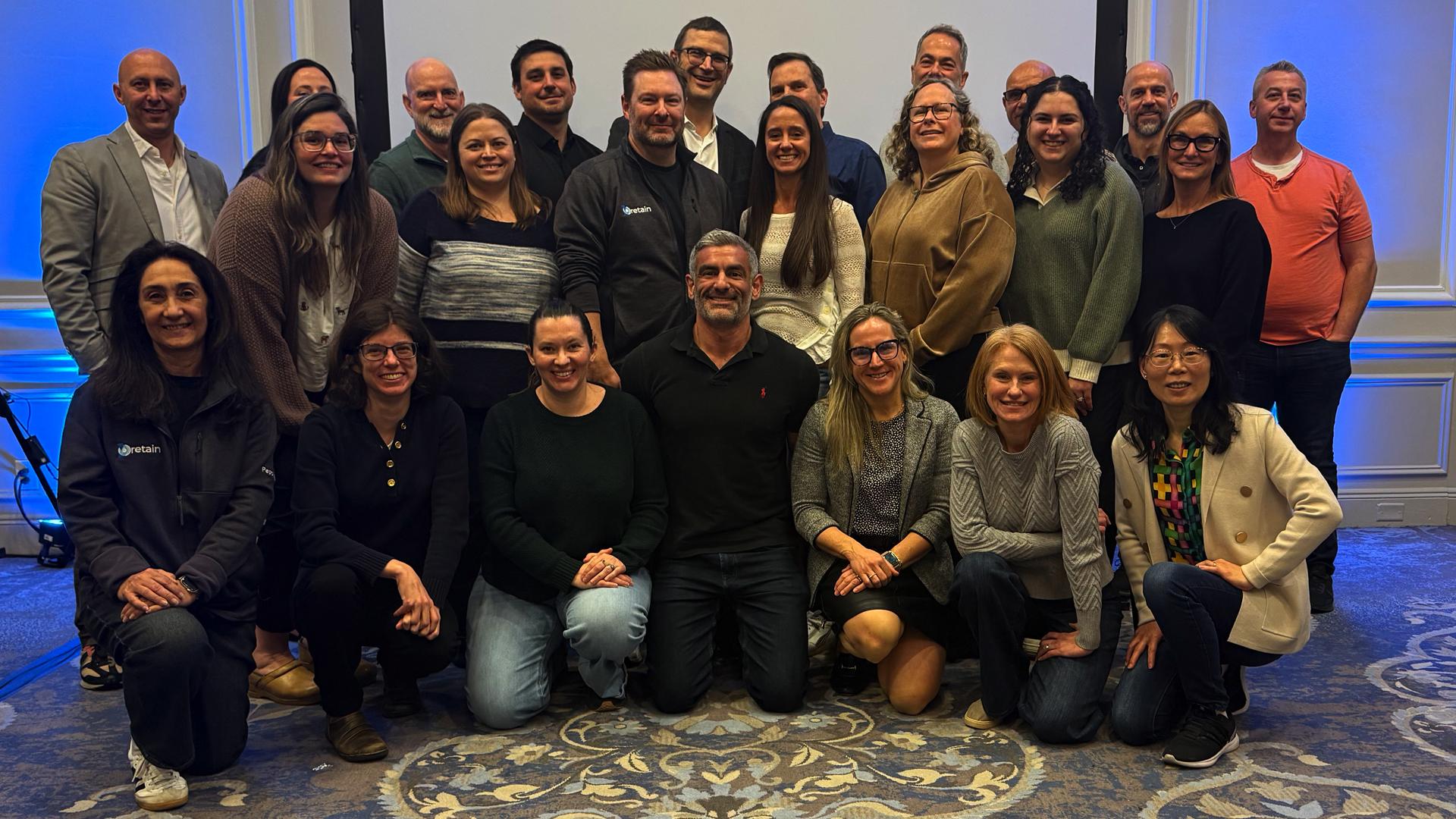
The team behind Peptilogics
The Problem: A Silent Crisis Hidden Behind Biofilm
To understand the value of what Peptilogics is building, it is essential to understand why medical device-related infections have resisted every conventional solution.
There are currently 55 million people in the United States alone living with an implanted medical device — joint replacements, cardiovascular assist devices, spinal fusion hardware, trauma fixation, hernia mesh, vascular grafts, and more. For the vast majority, these devices restore function and quality of life. Joint replacements represent one of the most successful interventions in modern medicine, with global procedure volumes projected to more than triple by 2040 as populations age. But a silent crisis begins in approximately two to five percent of the five million-plus knee and hip replacements performed annually across the US, EU, and UK, translating to approximately 300,000 prosthetic joint infection (PJI) surgeries every year. In emerging markets and among patients with significant comorbidities, infection rates can run two to four times higher. Compounding the challenge, underreporting in national registries remains a persistent problem, driven by inconsistent diagnostic criteria, varying study designs, and infection cases frequently managed across different clinical settings.
The mechanism of failure is as elegant as it is devastating. When bacteria encounter the non-organic surfaces of an implanted device, they stop floating freely and construct a structured community encased in a self-produced extracellular polymeric substance — a biofilm. This matrix acts as a protective shield against both the immune system and systemic antibiotics. Deep within it, a subpopulation of bacteria known as persister cells, comprising one to ten percent of the total population, become metabolically dormant and effectively vanish from the reach of drugs that require active metabolism to work.
This is the critical mismatch. Planktonic bacteria — free-floating, rapidly dividing, and metabolically active — are precisely the target that antibiotics were designed to destroy. Biofilm bacteria operate by entirely different rules. They are 10 to 1,000 times more resistant to the same antibiotics, and their dormant persister cells are essentially invisible to standard antimicrobial attack. The drugs available to clinicians today were engineered for a different disease. They are being asked to solve a biofilm problem with a planktonic solution, and the outcomes reflect that gap.
The consequences for patients are severe. PJI carries a 25 percent five-year mortality rate, rivaling many serious cancers. The current standard treatment, a grueling two-stage revision surgery in which the infected prosthesis is removed and replaced, subjects patients to an average of three operations and seven-day inpatient stays, with a 15 to 25 percent failure rate. The less invasive DAIR procedure reports 12-month failure rates of 30 to 60 percent. When standard care fails, charges escalate, pushing the total healthcare system cost beyond $600,000 per patient. The estimated total economic, treatment, and societal burden of PJI in the United States alone reaches $30 billion annually.
The root cause of these failures is consistent: no approved therapy has ever been specifically designed to target and eradicate biofilm.
The Product: PLG0206
Peptilogics is not repurposing a systemic antibiotic. PLG0206 is an engineered, first-in-class antimicrobial peptide designed from the ground up to solve the specific problem of biofilm and it does so through a mechanism unlike anything previously approved.
PLG0206 works by interacting directly with bacterial membrane lipids, altering the mechanical properties of the membrane in a way that creates localized zones of structural mismatch — regions of thick, stiff membrane adjacent to thin, fluid membrane. This physical disruption triggers unregulated ion flow across the membrane, dismantling the proton motive force that bacteria require to generate energy. The result is rapid bacterial cell death within seconds to minutes of exposure; critically, this mechanism operates independently of the bacterial metabolic state. PLG0206 kills both rapidly dividing planktonic bacteria and the dormant persister cells hiding within biofilm. Because the mechanism acts on a fundamental physical property of the bacterial membrane rather than a specific molecular target, PLG0206 demonstrates a low likelihood of resistance development, a vital attribute as antimicrobial resistance expands globally.
Clinically, PLG0206 is designed to be practical for use by surgeons. It is delivered locally as an intra-operative irrigation during DAIR, applied directly to the infection site at high local concentrations with minimal resulting systemic exposure. This “same surgery, better outcomes” design complements existing surgical workflows without requiring entirely new care pathways: Peptilogics is not asking surgeons to change what they do, it is giving them a tool that makes what they already do more effective.
The FDA has recognized the severity of the unmet need and the program’s potential, granting PLG0206 Qualified Infectious Disease Product (QIDP) designation, Orphan Drug designation, and Fast Track status, reflecting the agency’s assessment of the clinical urgency and the lack of existing approved therapies for this indication.
Clinical Evidence and the RETAIN Trial
The clinical signal for PLG0206 has been compelling at every stage. A Phase 1 study in 48 healthy volunteers established a clean systemic safety profile with no serious adverse events observed over six months. In the subsequent Phase 1b open-label study in patients undergoing DAIR for PJI, 13 of 14 PLG0206-treated patients experienced clinical success at 12 months, a 93 percent success rate compared to a historical standard-of-care failure rate of 35 to 55 percent.
“The results are striking. To see such a clear effect in these hard-to-treat patients is quite encouraging,” said Javad Parvizi, MD, FACS, a leading PJI surgeon and Peptilogics Advisory Board member.
Those results motivated the move into a pivotal trial. The RETAIN trial (NCT07214311) is a Phase 2/3, randomized, double-blind, placebo-controlled, multi-center registration study designed to assess superiority versus standard of care. The trial is structured in two sequential parts: Phase 2 will enroll 80 patients to evaluate safety and efficacy and allow for refinement of the Phase 3 sample size, followed by Phase 3 enrolling 120 to 160 patients, for a total planned enrollment of approximately 240 participants across up to 50 clinical sites in the United States, United Kingdom, and Australia. The primary endpoint is treatment failure at 12 months; the key secondary endpoint is the need for PJI-related surgical reintervention at the same timepoint. With the first patient dosed in February 2026 and Phase 3 commencement anticipated by Q4 2026, the trial is targeting NDA approval in 2029.
If RETAIN succeeds, PLG0206 would become the first FDA-approved therapy specifically designed as a first-line therapy to treat PJI and the first drug in any indication approved specifically to target biofilm.
Impact: What Success Means for Patients, Providers, and Payers
The clinical and economic case for PLG0206 are inseparable. Being able to resolve an infection with a single surgery while retaining the original device is critical in maintaining a patient’s mobility and reducing the number of surgeries, hospitalizations, and rehabilitation costs. Avoiding a second surgery means avoiding the months of disability, elevated mortality risk, and diminished quality of life that accompany staged revision.
For surgeons, a validated intra-operative adjunct that meaningfully improves DAIR success rates could change the treatment calculus for PJI, relieving the clinical burden of recurrent infection and reoperation. For hospitals and payers, fewer readmissions, shorter stays, and reduced revision volumes translate directly to capacity relief and lower costs.
Outlook: A Platform, Not a Single Drug
Peptilogics is emphatic on a crucial point: PJI is the beginning, not the destination.
“PJI is our first indication because it is the largest and most acute unmet need, but the biofilm biology is identical across all device categories,” said Jonathan Steckbeck, PhD, Peptilogics Founder and CEO. “If we are successful in RETAIN, we will have demonstrated a platform with the potential to cure and prevent infections wherever a medical device is implanted.”
Because the underlying biofilm biology is shared across device categories — spine hardware, cardiac pacemakers, hernia mesh, vascular grafts, and fracture fixation — the development strategy is to lead with the most acute indication, validate the approach in a rigorous pivotal trial, and then expand into adjacent indications where shared biology supports high translational confidence.
A second PLG0206 formulation, a controlled-release injectable designed to provide 30 days of sustained antimicrobial effect, is in preclinical development, targeting the prevention of fracture and trauma infections. This program deploys PLG0206 prophylactically at the moment of highest infection risk, before biofilm can form. Fracture and trauma, like spine infections, offer a potential accelerated and de-risked path to Phase 2 or 3 given the shared biology and the regulatory precedent being established in PJI.
The company’s leadership team brings deep experience in anti-infective drug development and commercialization, with veterans from organizations including Cubist Pharmaceuticals, Johnson & Johnson, Adagio Therapeutics, and the Pittsburgh Supercomputing Center.
With the first patient enrolled in RETAIN and clinical sites activating across three countries, the coming years will be decisive for Peptilogics. A successful pivotal trial would validate not only a single drug, but a therapeutic approach and a delivery strategy with potential relevance to the broader population of patients living with implanted devices.
The RETAIN trial represents a significant test of whether a purpose-built anti-biofilm therapeutic can succeed where conventional antibiotics have not. The results will be closely watched across the fields of orthopedics, infectious disease, and surgical care.
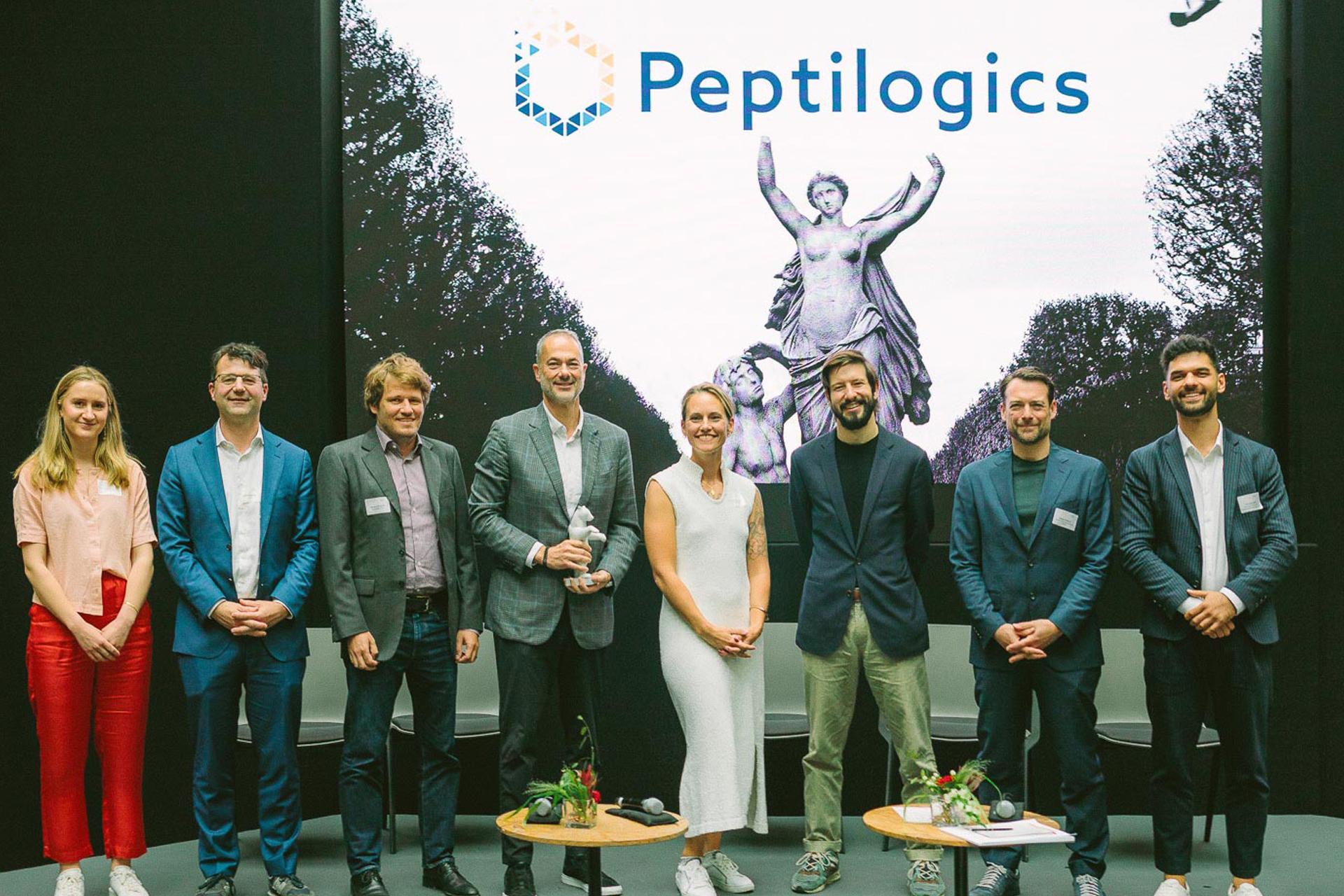
Peptilogics wins the ATiO Best Emerging Company Award 2026. Nicholas Pachuda (fourth from left) holds the award, joined by fellow finalists of the ATiO Best Emerging Company Pitch Contest: Markus Windows (Bios Medical Care, to his left), Ditte Jæger (Hazel Therapeutics, to his right) and Dustin Dopsa (Chiron, second to his right).
____________________
Peptilogics is a surgical therapeutics company headquartered in Pittsburgh, Pennsylvania. PLG0206 (zaloganan) is an investigational drug candidate and has not been approved by the FDA or any regulatory authority. Learn more at peptilogics.com.