
November 11th 2026
ATiO Award Winner 2026: SentryX - "Twelve out of Ten"
Scroll down

How a spine surgeon’s own experience of pain led to a new category of treatment
“Twelve out of ten.” Those were the words of a patient asked to rate her pain after waking up from spinal fusion surgery, a story Prof. JJ Verlaan still tells today. At that time, he had operated on hundreds of patients and heard many versions of the same answer. Having been on the receiving end of orthopedic surgery himself after a traffic accident, he knew better than most surgeons what she was describing. And as with all his patients, he was virtually powerless to do anything other than ask the anesthesiologist to ramp up the opioids.
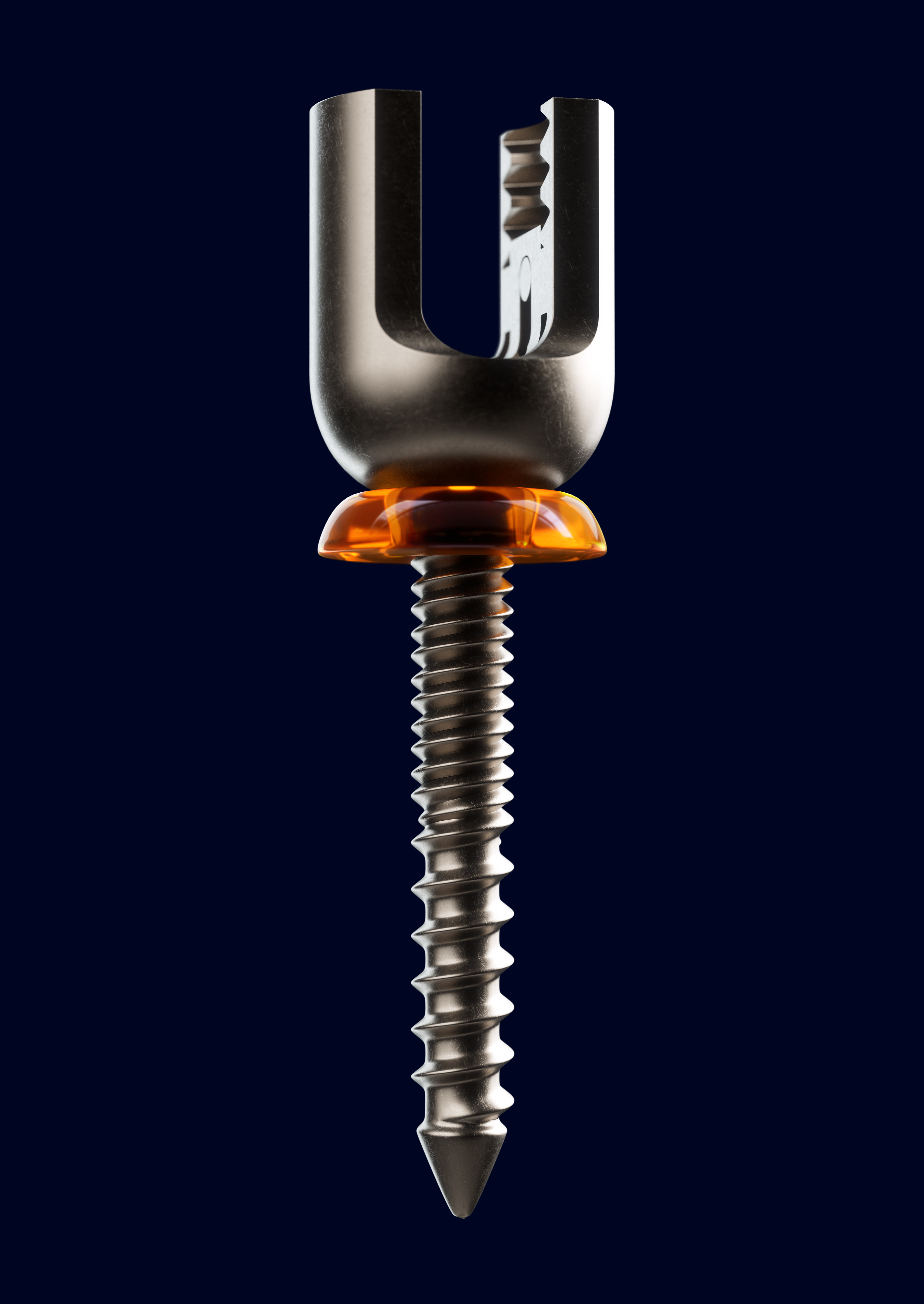
Verlaan later co-founded a company called SentryX based on a simple proposition: pain after major surgery should be treated at the source, for as long as it lasts, without opioids. This idea became what are now called surgical pain blockers, which are implanted during spinal fusion surgery to block pain at the source during the critical first days of recovery. In their first open-label clinical study against a matched historical cohort, patients reported 49% lower pain scores while using 42% fewer opioids in the first 72 hours. It also placed SentryX at the edge of a broader change now emerging in orthopedics: using active compounds alongside implants to address clinical problems that better hardware alone cannot solve.
Getting to these promising results took almost a decade. One afternoon in 2017, Verlaan was discussing alternative non-opioid pain treatments with his anesthesiologist between procedures. They quickly arrived at local anesthetics, which are among the safest and most effective analgesics in medicine. Although they have been in routine use for more than fifty years, from dentistry to epidurals, they were of limited to no help in major spinal fusion surgery in their generic form. A single injection lasts several hours, whereas the pain after spinal fusion lasts several days. They thought: if we can deliver the right concentration at the right place for the right time, nothing would trump the risk-benefit ratio of a local anesthetic.
Verlaan kept working on the problem afterwards. As a fervent DIY enthusiast, he quickly arrived at something deceptively simple: a drug-eluting washer that fits underneath the head of a spine fixation screw and slowly releases the amount of local anesthetic needed to block the nerves of the surgical site for several days.
By coincidence, one day, he described his idea to Bas Oosterman, whom he met at the schoolyard of both their children. Oosterman had recently built up a mid-sized clinical research organization and had the expertise and the time to find out whether the concept would hold. The two teamed up, and SentryX was established in late 2017.
A New Class of Biomaterials

The first requirement was a prototype, and here the founders were fortunate. The Department of Orthopedic Surgery at UMC Utrecht, where Verlaan worked as a consultant spine surgeon, had a long-standing scientific collaboration with the Regenerative Medicine Center Utrecht at the Hubrecht Institute. Among the researchers there was Susanna Piluso, a postdoctoral researcher with a PhD in Materials in Life Sciences and extensive experience in hydrogel formation. She helped develop the chemical foundation of what would become surgical pain blockers and later joined the team full-time.
In the beginning, product demands seemed to be pulling in opposite directions. On the one hand, it had to withstand the considerable forces applied to it while being co-implanted with spine fixation screws. At the same time, it had to be flexible enough to not get in the way of the screw itself, finding the available space when put under pressure. And, to make things worse, it had to release the local anesthetic drug in a predictable, controlled way over several days rather than hours.
This combination of properties was a real challenge, as no materials readily existed that could do all these things at the same time. Because local anesthetics are relatively small molecules, slowing their release normally requires denser networks to reduce their outflow. However, this solution would make the material more rigid and more brittle and thus unfit for the intended surgical use. Over the next several years, many iterations and multiple breakthroughs in biomaterial design produced a strong, viscoelastic and tissue-like biopolymer that met all the design criteria. This revolutionary material is now protected by multiple patents in Europe, the United States and China. Both this new drug delivery technology and all the required manufacturing steps were developed entirely in-house.
From the Bench to the First Patient
By 2020, the team had grown to around eight people and the first prototypes were ready for preclinical development. The selected candidate, designated BR-003, went through non-GLP and GLP animal studies between 2020 and 2022, showing no local toxicity and a wide systemic safety margin. The first patient was treated just before the summer of 2023.
Results were compared against a matched historical cohort from the same hospitals, surgeons and patient population. Over the first three days, patients treated with what SentryX now calls its spine surgery pain blocker reported 49% lower pain scores while using 42% fewer opioids. Because the study used a historical control rather than a randomized, blinded design, the efficacy findings remain preliminary. Still, the concurrent reductions in both pain scores and opioid use provide a consistent efficacy signal that the next randomized, placebo-controlled study is designed to confirm. No related serious adverse events were observed, and no safety concerns emerged in follow-up to one year. Systemic concentrations stayed 13 times below the known toxic threshold, which shows the drug working locally rather than circulating, confirming the entire premise of the approach.
The True Cost of Pain After Surgery
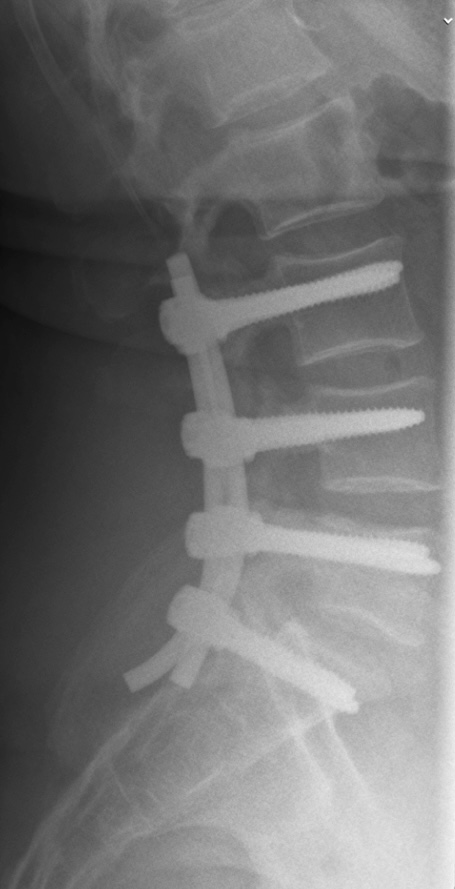
In parallel, SentryX was coming to understand that better pain treatment after surgery is not only about improving the lives of individual patients. Dealing with postsurgical pain is a prominent problem for healthcare systems and society.
Of all surgical procedures, spine surgery is one of the most painful. Spine surgery also carries a high risk of new and persistent opioid use. Recent large cohorts report new and persistent opioid use in roughly 10–20% of patients who had never used opioids before their operation [1]. In addition, severe acute pain after surgery carries a 20% chance of rewiring how the nervous system responds to pain, resulting in chronic postsurgical pain conditions [2,3]. With over a million relevant spine surgeries every year across the US and Europe, the operating room has become an important and vastly underrecognized contributor to the opioid crisis. At the same time, because opioid exposure is entirely under hospital control, it can be changed with better alternatives.
Health economic analyses show that improved pain control can improve recovery after surgery and save costs at the same time. In most developed countries, spine surgery accounts for more total healthcare spending than any other surgical procedure [4]. Unlike hip and knee replacement, where length of stay has fallen substantially, in spine surgery it has not moved in more than twenty years [5]. An international survey of more than 250 spine surgeons in 2024 named pain as the main bottleneck to early recovery [6], and recent literature reports that 57% of patients have poorly controlled pain, which doubles their hospital stay [7]. A further 13.6% suffer serious opioid-related adverse events, which are dangerous and expensive to treat [8]. Better pain treatment can result in better recovery with fewer side-effects, more predictable care planning, and shorter hospital stays. Just a one-day reduction in length of stay would already yield billions in direct hospital cost savings per year. For hospital administrators, those savings increasingly have direct financial value: since January 2026, CMS’s mandatory TEAM model has included spinal fusion at selected hospitals, linking 30-day episode spending to financial rewards or repayments [9]. The NOPAIN Act also provides temporary additional Medicare payment for qualifying non-opioid pain treatments in hospital outpatient and ambulatory surgical center settings [10].
A Field That Is Starting to Change
Spine surgery, like most orthopedic fields, has historically been a hardware-dominated market. Today, the field is starting to realize that several of its largest unmet needs cannot be solved with metal, plastic or robots alone. Problems such as pain, infection and bone healing increasingly require biology as well as engineering. SentryX belongs to an emerging group of companies addressing spine surgeons’ top issues with drugs and biologics instead, including surgical site infections, bony fusion, and pain. Together, these companies are beginning to create a new space at the intersection of devices, biomaterials and active compounds. “We are asking MedTech strategics to rethink the way they develop and commercialize products, and this takes time,” says Verlaan. “However, we are seeing them become genuinely interested, and when the first big moves are made in this field, we believe everyone will start embracing active compounds in their portfolios.”
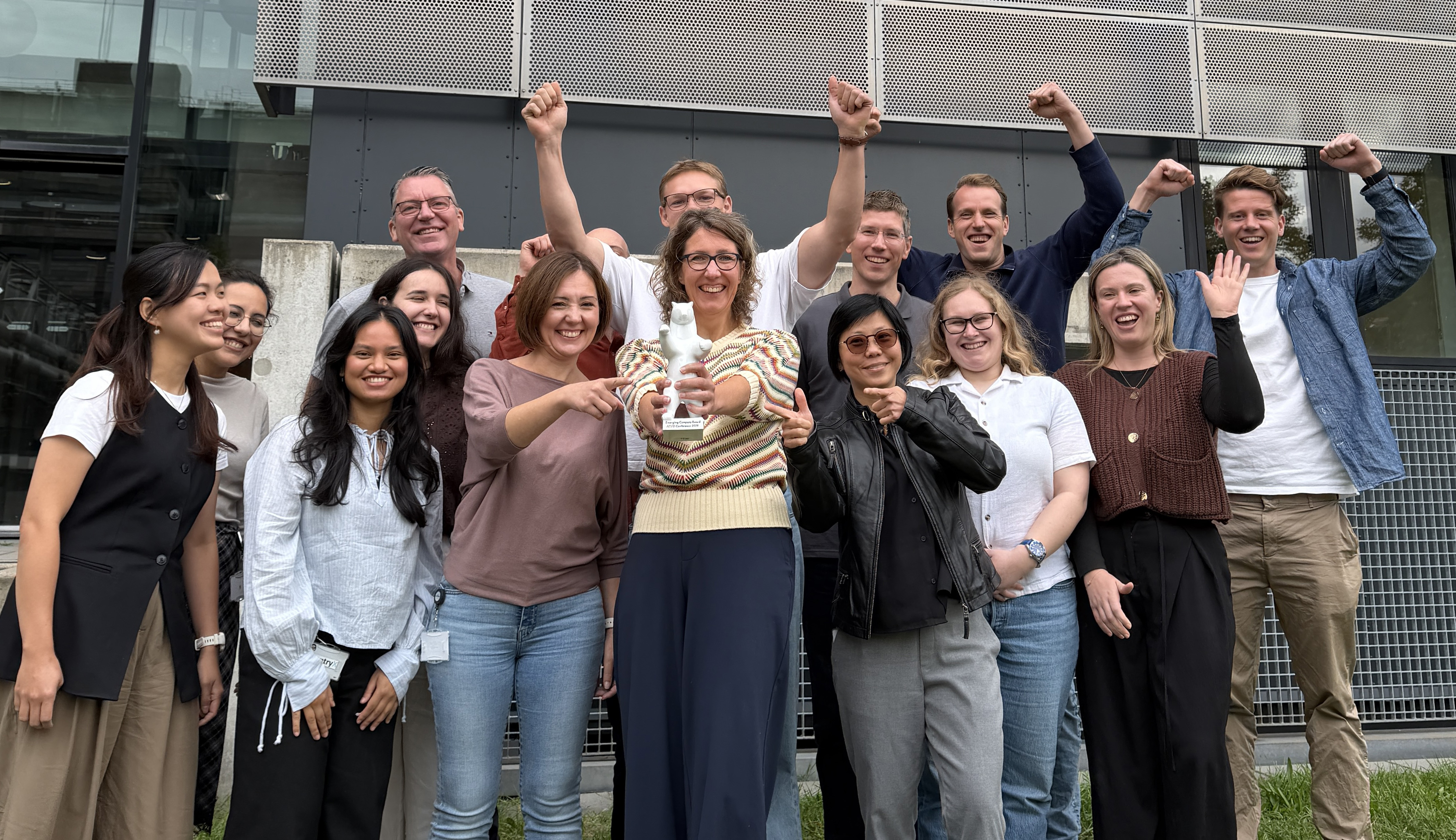
This is also where an organization like ATiO comes in. Advanced therapies in orthopedics have no natural home in either the device or pharmaceutical sector. BR-003 illustrates this overlap: it is regulated as a drug in Europe and as a drug-device combination in the US. Developers therefore need a place where surgeons, materials scientists, regulators and industry come together to advance shared interests. No single company shifts a paradigm on its own, and SentryX is grateful to be part of the ATiO network and for the recognition of winning first place in the 2026 Emerging Company Pitch Contest.
What Comes Next
SentryX is now preparing the next stage of clinical development, co-funded by the European Union via the EIC Accelerator program. The plan is an adaptive, randomized, placebo-controlled combined Phase 2/3 study in several hundred patients, intended as the last clinical step before filing for approval in Europe and the US.
Looking further, the spine surgery pain blocker is only the first application of a broader platform. SentryX calls it ILA technology, for implantable local anesthetic: a carrier that a surgeon can implant during the procedure to release a local anesthetic at the surgical site for several days. This principle can be applied wherever surgery induces pain, including joint replacement, fracture fixation, and soft tissue procedures such as abdominal wall surgery or caesarean sections.
“Pain has always been somebody else’s concern, treated after the fact and elsewhere in the hospital,” says Verlaan. “What we want is to empower surgeons to integrate pain treatment into the procedure itself, and to give them control over the critical first days of recovery.”
Ten years after a coffee break conversation between a surgeon and an anesthesiologist, the answer to that patient’s “twelve out of ten” is closer than it has ever been. For SentryX, that means bringing surgical pain blockers to patients. More broadly, it is part of a shift toward an orthopedic field in which implants, biomaterials and active compounds increasingly work together. Bringing together the clinicians, scientists and industry needed to make that shift happen is precisely why organizations such as ATiO matter.
References
- Cook DJ, Kaskovich S, Pirkle S, Ho A, Mica MC, Shi LL, Lee M. Benchmarks of duration and magnitude of opioid consumption after common spinal procedures: a database analysis of 47,823 patients. Spine (Phila Pa 1976). 2019;44(23):1668–1675. doi:10.1097/BRS.0000000000003141.
- Rosenberger DC, Pogatzki-Zahn EM. Chronic post-surgical pain: update on incidence, risk factors and preventive treatment options. BJA Educ. 2022;22(5):190–196. doi:10.1016/j.bjae.2021.11.008.
- van Driel MEC, van Dijk JFM, Baart SJ, Meissner W, Huygen FJPM, Rijsdijk M. Development and validation of a multivariable prediction model for early prediction of chronic postsurgical pain in adults: a prospective cohort study. Br J Anaesth. 2022;129(3):407–415. doi:10.1016/j.bja.2022.04.030.
- McDermott KW, Liang L. Overview of operating room procedures during inpatient stays in U.S. hospitals, 2018. HCUP Statistical Brief #281. Rockville, MD: Agency for Healthcare Research and Quality; 2021.
- Agency for Healthcare Research and Quality. Healthcare Cost and Utilization Project (HCUP), National Inpatient Sample (NIS). Rockville, MD: Agency for Healthcare Research and Quality; SentryX analysis of longitudinal length-of-stay data.
- Jonkman HR, van Tol FR, Govers TM, Debets SACA, Wainwright TW, Debono B, et al. Enhanced Recovery After Lumbar Fusion Surgery: an international survey on current practice. Global Spine J. Published online March 12, 2026. doi:10.1177/21925682261434216.
- Far R, Riva-Cambrin J, Casha S, Yang MMH. Poor postoperative pain control is associated with prolonged length of stay after elective spine surgery: an observational cohort study. N Am Spine Soc J. 2026;27:100907. doi:10.1016/j.xnsj.2026.100907.
- Kessler ER, Shah M, Gruschkus SK, Raju A. Cost and quality implications of opioid-based postsurgical pain control using administrative claims data from a large health system: opioid-related adverse events and their impact on clinical and economic outcomes. Pharmacotherapy. 2013;33(4):383–391. doi:10.1002/phar.1223.
- Centers for Medicare & Medicaid Services. TEAM (Transforming Episode Accountability Model). CMS Innovation Center. Accessed September 30, 2026.
- Centers for Medicare & Medicaid Services. Non-Opioid Treatments for Pain Relief: Section 4135. Hospital Outpatient Prospective Payment System. Accessed September 30, 2026.